
Menu
Ideas
Ideas for making complicated work simpler.
Practical questions for organizations deciding what to improve, what to connect, what to buy, and what may finally be worth building.
Explore the questions
before building
Ideas
Practical questions for organizations deciding what to improve, what to connect, what to buy, and what may finally be worth building.
Explore the questionsThese are not product pitches. They are ways to recognize whether the real need is a clearer process, a better use of existing software, or a purpose-built system.
01
A long form often asks people to understand your organization before your organization understands them. A guided path can ask one useful question at a time and respond to each answer.
02
Spreadsheets are excellent for proving a process. They become difficult when several people need permissions, history, reminders, relationships, and one reliable version of the truth.
03
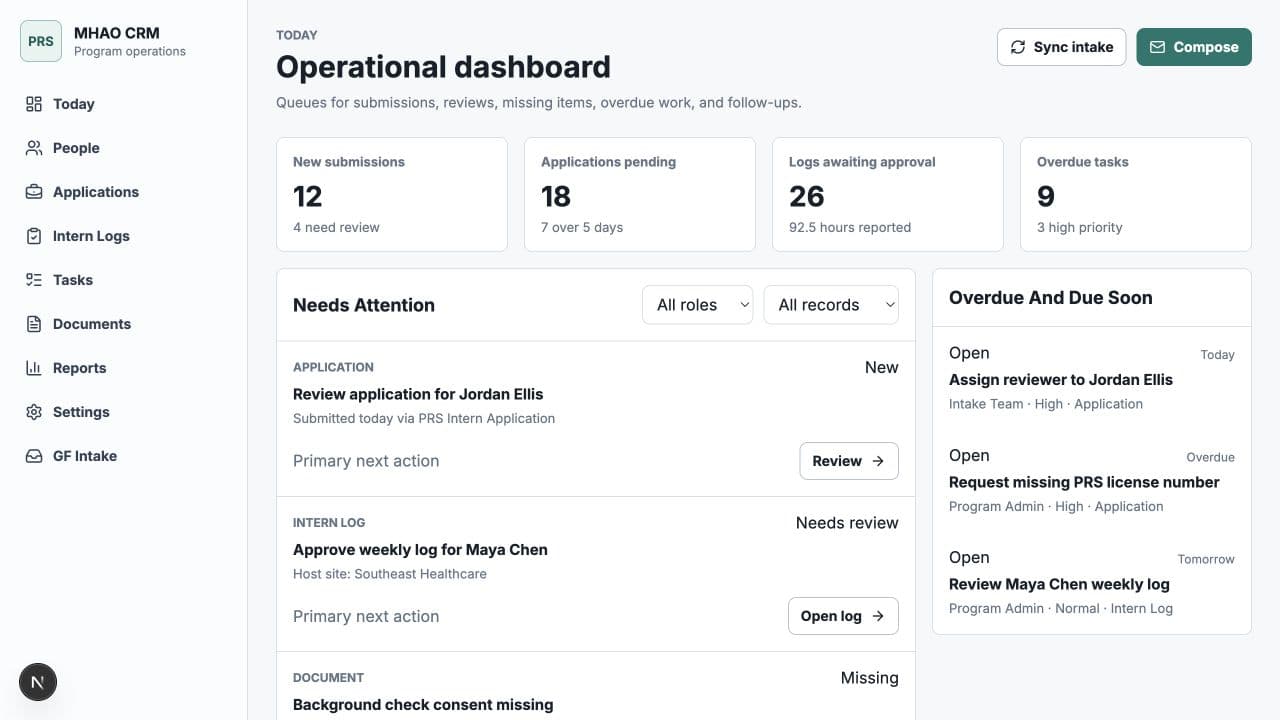
A CRM should reduce memory work. When the team maintains shadow spreadsheets, ignores fields, or cannot see the next useful action, the system is no longer supporting the process.
04
Buying is usually right when the process is common and the available product fits without changing how people work. Building becomes useful when the workflow itself creates meaningful advantage or impact.
05
AI can shorten research, drafting, testing, and implementation work. It does not remove the need to understand the process, protect data, make good decisions, or maintain the result.
You do not need to know whether it needs a website, an integration, an application, or something simpler. That is part of the work.
Your message goes directly to Amanda.